The Matching Set Myth: Mixing Furniture Without Losing Coherence
Mixing furniture without losing coherence starts with one shared visual feature, helping you choose individual pieces that belong together without buying a complete set.
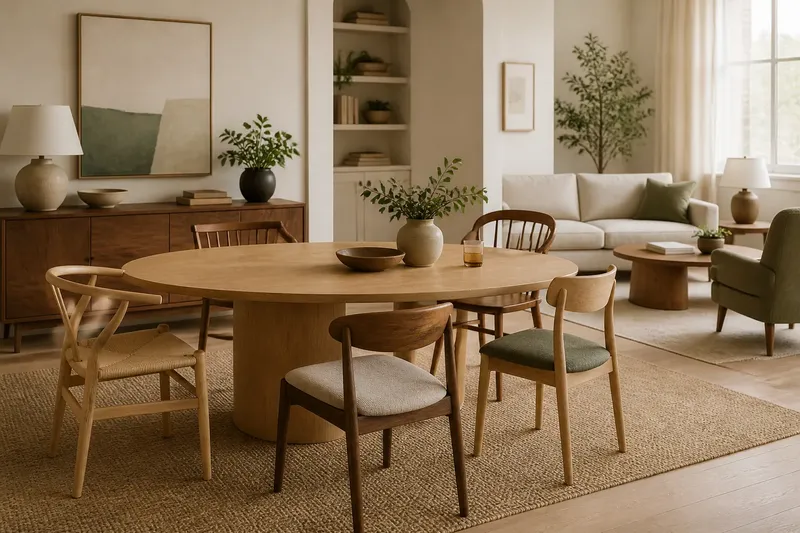
You pull a dining chair away from the table and notice that its pale oak legs echo the cabinet across the room, though the chair and table came from different shops. That small connection is often enough to make a room feel considered. Mixing furniture without losing coherence is less about finding identical pieces than deciding what should repeat.
A complete set can be convenient, but it is only one way to create visual order. A room may feel more personal when furniture differs in age, shape or material, provided there is a clear relationship among the pieces. Choose one shared feature—proportion, finish, colour or line—and let the rest vary with purpose.
Choose your starting point
Before shopping, look at the pieces that must stay. These might be a dining table inherited from family, a sofa that suits the room, or a bookcase built into an alcove. Ask what they already have in common: a warm finish, rounded edges, a low profile, or a particular visual weight. That observation gives you a useful anchor.
Then consider what the room needs to do. In a dining room, chairs must work with the table in height and use, even if their silhouettes differ. In a sitting room, a coffee table may contrast with the sofa while still relating through colour or scale. Visual coherence should support the room’s practical demands, not obscure them.
Match proportion first
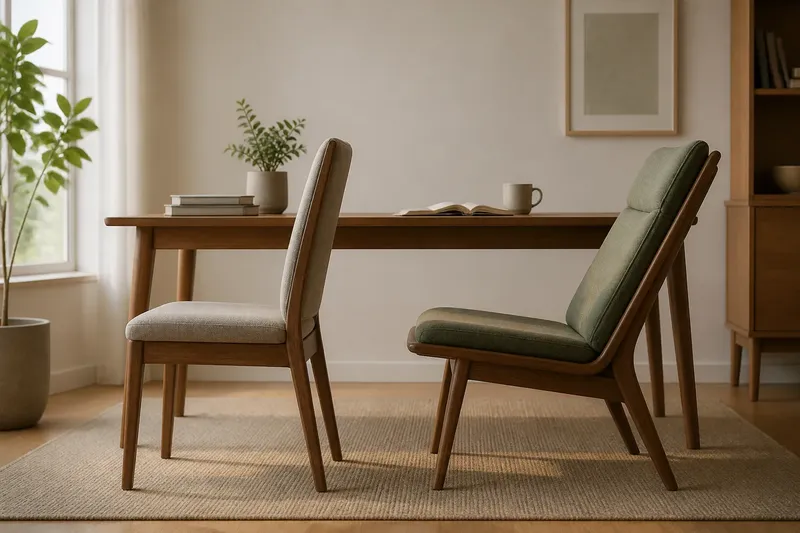
Choose proportion as your shared feature if the room contains pieces with different finishes or materials but a similar sense of scale. A low, broad sofa can sit comfortably beside a low side table and a wide armchair; a delicate occasional table may look lost beside bulky seating. Compare how much visual space each piece occupies, not just its catalogue dimensions.
This approach suits rooms where the furniture already varies in colour, such as a collection assembled over time. Keep the outlines in conversation: perhaps several pieces have broad tops, open legs or rounded corners. They need not repeat all three. One recurring shape can make a varied group feel related without turning the room into a display of matching silhouettes.
Use finish as the link
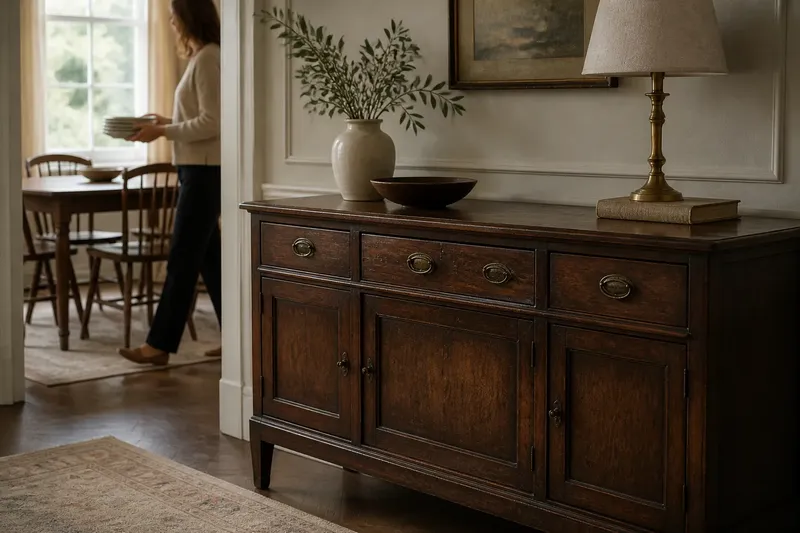
Choose a shared finish when the room has strong differences in shape but would benefit from a quieter thread. A walnut-toned table, a dark-stained cabinet and a chair with a similar brown frame can sit together even if their forms are quite different. The match need not be exact; a common warmth or depth may be more natural than identical colour.
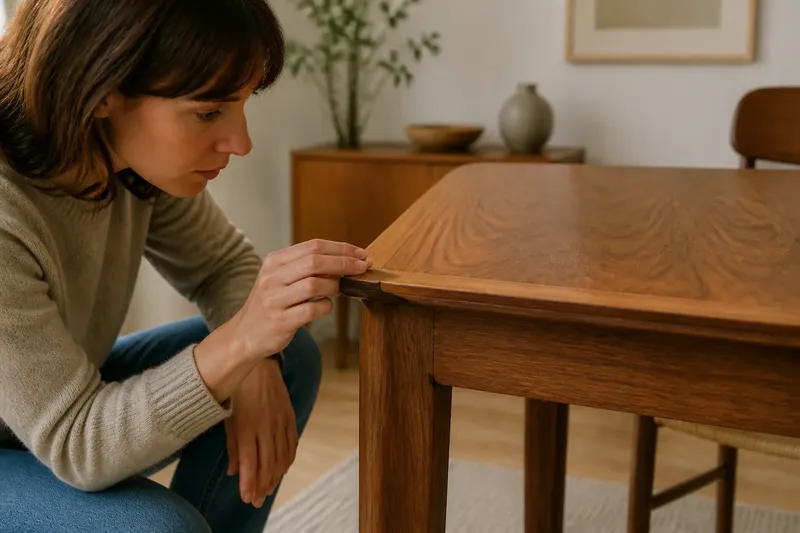
Finish is especially useful when several pieces occupy the same sightline. Look at them in the room’s actual light, since a surface can appear cooler near a window or warmer beside a lamp. If a new finish looks isolated, repeat its tone in a smaller object or select another piece with a related undertone. Avoid forcing every wood surface into a single shade; variation can keep the room from looking flat.
Keep colour in reserve
Use colour as the connecting feature if the furniture has mixed materials and finishes that are difficult to reconcile. A muted green on a chair can recur in a painted cabinet or a woven seat, while the wood tones remain different. This is a good choice for a room where colour already has a role and where a repeated hue will feel intentional rather than added for the sake of matching.
For a quieter interior, let colour appear in only a few places and keep the larger furniture forms more restrained. A single bright chair can be a deliberate accent, but it may not need a second bright piece. The relationship can come from a shared edge or scale instead. Think of colour as a thread through fabric: it can connect separate areas without covering the whole surface.
Let one piece lead
When a room contains a distinctive item—a sculptural chair, an unusually figured table or a cabinet with visible patina—let it lead. Select quieter furniture around it, repeating a modest feature such as a leg shape or finish. This situation suits people who want a focal point but do not want every piece to compete for attention.
Imagine you have a rounded, pale timber dining table and need four chairs. You might choose two with curved backs and two with simpler frames, all in a similar light finish. The expected result is a table that remains the visual centre while the chairs feel related through both curve and tone; their differences add character without making the group seem accidental.
Questions for choosing?
Do dining chairs need to match the table?
No, but their seat height and shape should suit the table and allow people to sit comfortably. A repeated finish or leg profile can provide a visual link while the chair backs differ.
Can different wood tones share a room?
Yes, especially when they share a warm or cool undertone, or when one tone appears again elsewhere. View the pieces together in the room rather than relying only on small finish samples.
How many styles can I mix?
There is no fixed count; the useful question is whether the pieces share a visible relationship and serve the room. If several forms compete, simplify the next choice by repeating one feature already present.
What if nothing seems to match?
Look for a relationship beyond colour: similar height, open space beneath the furniture, rounded edges or a comparable visual weight. If a piece has no useful connection to the rest, it can still work as a deliberate focal point, but give it breathing room.
Shop with a clear rule
Take a photograph of the room and note the one feature you want to repeat before visiting a shop. At home, compare a prospective piece against the existing furniture from the main doorway and from the places where you sit. This makes it easier to judge how the whole group reads, rather than being swayed by a handsome object viewed alone.
For each candidate, ask:
- Does it support the room’s everyday use?
- Which existing feature does it repeat?
- Does its scale feel balanced beside the largest piece?
- Will its finish or colour make sense in the room’s light?
- Is it adding a useful contrast, or merely another competing detail?
If the answer to the second question is unclear, pause before buying. You can often find a better connection in a different silhouette or material, without replacing furniture that already works. Check product labels and manufacturer instructions for care requirements, particularly when combining surfaces that need different cleaning methods.
The matching set myth persists because identical pieces make decisions easy, not because they are the only route to a coherent room. Mixing furniture without losing coherence means choosing a relationship you can see and explain, then allowing the remaining details to differ. A room often feels more settled when each piece has its own character and still knows what it is sitting beside.